Good Measures
Learn about the different methods, strengths, and limitations of self-report data
Learn about the different methods, strengths, and limitations of observational data.

Hard Data in a Soft Science
One of the challenges psychologists face in their attempts to be a REAL SCIENCE ™ is that their data is particularly hard to collect. Unlike physical variables like temperature or mass, psychological variables are often internal to people, and defined by mental states that are difficult to observe. As we saw in lecture, even a “simple” expressed behavior like an interruption can be very difficult to measure with high degrees of reliability and validity that we would hope. For a more complex variable such as depression, the task might seem impossible. Indeed, a large part of psychological research is engaging in debate and scholarship about how to best operationalize variables of interest (e.g., how should we define or measure depression?)
A full discussion of the different types of methods psychologists use to collect data is beyond the scope of this author. However, below I’ve tried to outline a few different approaches psychologists take, commenting on their benefits and limitations so you can begin to critically think about whether these methods are, in fact, getting at “THE TRUTH” of what people (or non-human animals) are like.
Self-Reports
One of the simplest ways to collect data on an individual is just to ask them what they are like, and have the person report on themselves (a self-report). There are two different approaches to getting self-reports - survey methods and qualitative interviews.
Qualitative Interviews
One way to get individuals to tell you what they are like is through a structured interview where researchers ask open-ended questions. One such example of this is the McAdams Life Narrative1. In this structured interview, a trained research assistant asks a set of broad questions to participants over the course of 1 to 3 hours. The research assistant is advised to “feel free to skip some of these questions if they seem redundant or irrelevant, and should follow up with other questions as needed “ but also to “not adopt an advisory or judgmental role, but should instead serve as an empathetic and encouraging guide and an affirming sounding board.”
1 McAdams talks about his work in this popular press interview and writes about it in this scientific journal review article.
Below is an excerpt from the first part of the interview.

Survey Methods
Qualitative interviews are not very common in psychological research, because they take a lot of time to conduct, and then more time to convert people’s open-ended responses into data (a form of behavioral coding, described in more detail below).
Instead, the majority of self-reports come from surveys. Read about these below.
| Definition | A questionnaire where individuals answer specific questions about themselves on a structured rating scale. |
| Example | “On a scale from 1 (Strongly Disagree) to 5 (Strongly Agree), how satisfied with your life are you right now?” |
| Benefits |
|
| Limitations |
|
2 Indeed, our society decides what forms of cheating are acceptable.
Self-reports have a bad reputation in psychology, particularly because of the ability for people to engage in self-enhancement or self-diminishment, or have self-insight bias. However, they are a very powerful, and very commonly used method of assessment, even for studies where researchers are able to observe other types of data.
For example, despite all the behavioral data that powerful technology companies like Facebook/Instagram/Meta, TikTok, Twitter/X, etc. collect, you’ve probably seen them ask you to answer some survey. They care about you3, and know that asking you questions about yourself is an important way to show that level of care.
3 …and your clicking on advertisements; hey, it’s hard to distinguish the two really…
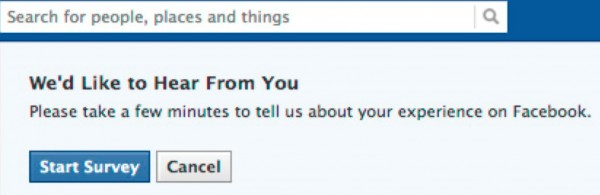
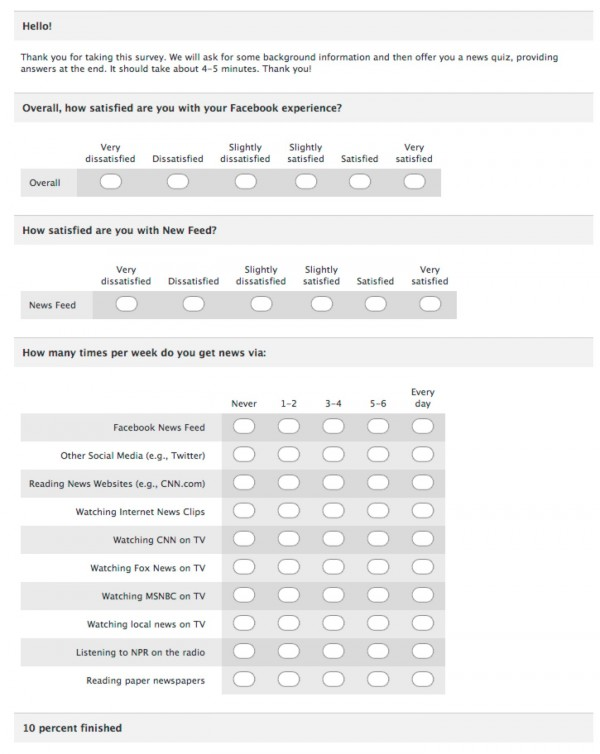
Below is one example from some survey when I used to be on Facebook. If Facebook changed its graphic design since I took this screenshot, it’s probably because of some survey feedback they received.
Observations
Observational methods refer to ways in which another individual generates data about a person of interest (often called “the target”). Observational data is important to use when researchers are studying individuals who cannot give reliable and valid self-report data, such as infants, people with cognitive or motor disabilities, or non-human animals.4
4 If I was a billionaire, I’d fund a team of psychologists to train monkeys to answer surveys. this is maybe why I am not a billionaire. that and the whole “intergenerational wealth” thing / chosen teaching career / lack of a desire to crush others and extract as much wealth from them…hard to know which factor is at play. Life is complex! Let me know if you are a billionaire and want to fund some other ideas / subscribe to my newsletter.
| Definition | |
| Examples | Informant Reports. Informant reports are a special form of surveys, where researchers ask friends, family, or strangers to answer survey questions about another person. This is technically observational data, since the people answering the surveys are basing their judgments on their observations of the individual.
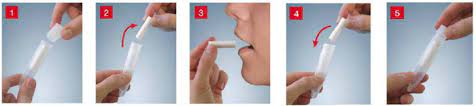
Behavioral Data. When the variables of interest are physical, then researchers can use measurement tools to directly observe the behavior. For example, researchers wanting to measure stress might measure cortisol by taking samples of saliva from the cheek; researchers wanting to understand the brain look to voxel activation with fMRI, or cortical neuron activation with EEG.
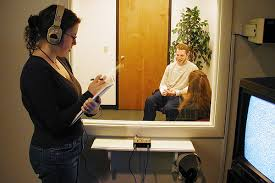
Behavioral Coding. Sometimes, it’s easier to have research assistants observe the physical behaviors of interest. For example, research assistants will observe real-life interactions and observe variables such as time spent talking, distance between participants, or provide ratings of how much emotion or anxiety the person seemed to be expressing (using a rating scale). The “strange situation” task (where a parent leaves the room and researchers observe what a child does) is another example.5
|
| Benefits |
|
| Limitations |
|

5 You can compare this child’s reaction to this child’s reaction. What do you observe? How would you quantify these observations and turn them into cold, hard data?